

Why Chiropractors Need Real Ownership of Their Clinic Website in 2026
If you have ever stared at your clinic website and thought, “This could be so much better… if I could actually get into it,” you are not alone.
A lot of chiropractors are dealing with the same frustrating reality: they know their website needs work, they have ideas, they know what should change, and yet making even a simple update feels like submitting a request into the void and hoping it comes back someday.
You send an email. You wait. You follow up. You wait again. Eventually, someone gets back to you with a vague timeline, and somehow your website, the digital front door to your practice, still feels like it belongs more to your provider than to you.
That is the real problem. A website is not just something you pay for. It should be something you own, control, and can improve without friction.
This blog is about why so many chiropractors feel stuck, why that lack of control is costing them more than they realize, and why website ownership has become non-negotiable.
The Modern Chiropractic Website Problem: Everything Takes Too Long
Most chiropractors are not asking for anything unreasonable.
You want to update your hours for a holiday week.
You want to add a new service section.
You want to swap out old photos that make the clinic feel dated.
You want your homepage to sound more like you and less like it was written by a committee of robots.
You want a “New Patient” page that actually reduces anxiety and gets bookings.

None of this should require a three-week email chain, a ticketing system, and a vague promise that “a developer will take a look.”
And yet, many clinics are stuck in exactly that cycle because they do not truly own their website in a practical sense. They may “have a website,” but access and control are layered behind a provider, a platform, or a hosting service that treats small changes like major projects.
If this sounds familiar, it is because the traditional web support model was built for a slower era. The problem is that in 2026, digital marketing is not slow. It is a constant stream of small adjustments driven by how patients search, how platforms change, and how your clinic evolves.
Why Slow Website Support Hurts More in 2026 Than It Did Before
This is not just about aesthetics. Slow support affects performance in a few specific ways.
First, it kills your ability to iterate. A website that converts well is almost never “one and done.” It is improved through small refinements: clarifying messaging, making booking easier, updating service descriptions, adding FAQs, adjusting layouts for mobile, and keeping trust elements fresh.
Second, it creates a weird mental block. When you know any request will become a drawn-out process, you stop asking for changes. The website becomes a frozen artifact instead of a living tool. That is when clinics start saying things like, “Our website is fine,” when what they really mean is, “We gave up.”
Third, it actively conflicts with how patients discover care now. People are increasingly using AI tools and AI-driven search experiences to ask health questions and compare options quickly. A clinic cannot afford a slow-moving digital front door while discovery is speeding up.
A March 2026 KFF poll found that about one-third of U.S. adults have used AI chatbots for health information. (kff.org) Pew’s April 2026 research also found that, among people who use AI chatbots for health information, nearly half describe it as highly convenient. (pewresearch.org)
Convenience changes behavior. When people get fast answers, they move faster. They choose faster. They book faster.
At the same time, AI is changing the search landscape even when patients still “use Google.” McKinsey reported in October 2025 that half of consumers intentionally seek out AI-powered search engines, and their analysis noted AI summaries are appearing in a large share of Google searches. (mckinsey.com) Gartner predicted search engine volume would drop by 25% by 2026 as AI chatbots and virtual agents take share. (gartner.com)
In this environment, “we can update that next month” is not neutral. It is a disadvantage.
If you want the strategic framing for this shift, it connects directly to Why Being Found Isn’t Enough in 2026: Build Your Content Ecosystem and the forward-looking approach in GEO: The Future of Marketing for Chiropractors.
The Hidden Cause: You Don’t Actually Have Access to Your Own Website
Many chiropractors think they “own” their website because they pay for it monthly. But ownership is not a monthly invoice. Ownership is control.
If you do not control your domain, you do not fully own your brand’s online address.
If you do not have admin access to your website, you are renting access to your own digital front desk.
If you cannot get changes made quickly, you are operating with a delay baked into your marketing.
Even domain ownership matters in a very practical way. ICANN notes that good domain administration helps prevent losing domains due to expiration or hijacking, and poor management can disrupt operations and harm reputation. (icann.org) CFIB also emphasizes domain protection practices like monitoring, WHOIS checks, and enabling two-factor authentication. (cfib-fcei.ca)
This is not paranoia. It is resilience. In a modern clinic, your domain and website are business-critical infrastructure, right alongside your phone number and your scheduling system.
What Chiropractors Actually Want When They Say “I Need a Website Refresh”
When a chiropractor says they want to update their website, they usually mean something deeper than “make it prettier.”
They want the site to feel current and trustworthy.
They want it to reflect the real vibe of the clinic.
They want new patients to understand what happens next without feeling nervous.
They want booking to be easy.
They want the site to support the clinic’s growth, not quietly hold it back.
That is why conversion matters just as much as design. A refreshed site that still confuses new patients is just a nicer-looking leak. If you want to connect the dots between clarity and bookings, Website Conversion Basics for Chiropractors is the cleanest framework. And if you want a practical blueprint for your first-visit experience, The Perfect New Patient Page for Chiropractors is worth saving.
Why This All Feels So Daunting (And Why That’s Normal)
Here is the honest part: the reason this gets frustrating is that chiropractors are busy. You have patients all day. You have staff questions. You have insurance realities. You have a clinic to run. You do not have the time or mental space to chase someone down for a simple image swap or a headline update.
And it feels ridiculous that you even have to. A clinic should not need project management skills to update a website section. You should not have to “get in line” for your own marketing.
So if you have felt stuck, it does not mean you are behind. It means you are running into an outdated service model that is not built for 2026.
The Spinealytics Difference: Fast, Human, Ownership-First Website Support
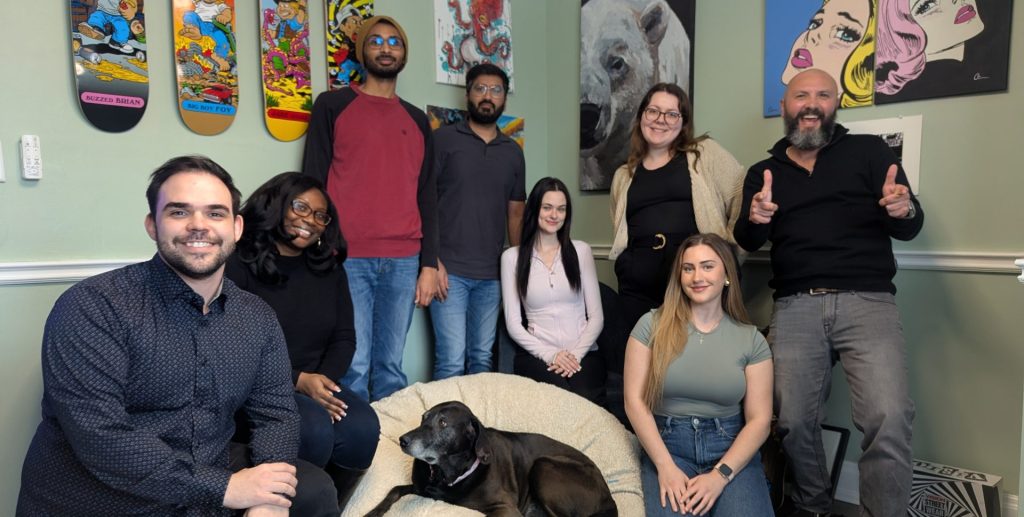
This is where Spinealytics is positioned differently, and why clinics are increasingly looking for a team that feels less like a ticketing system and more like a partner.
Spinealytics takes an ownership-first approach. Your clinic owns the domain and core assets. Your clinic has access. Your clinic is never in a position where a simple update requires weeks of waiting and multiple follow-ups. That one change alone reduces stress because it removes the “what if we need to move?” fear that many clinics quietly carry.
But ownership is not the whole story. The other piece is responsiveness and care.
The Spinealytics model is built around real conversations, not endless threads. You get professionals who listen to what you want your website to do, not just what you want it to look like. That matters because the best chiropractic websites are not built by guessing. They are built by understanding the clinic’s care philosophy, the patient journey, and the trust hurdles that stop people from booking.
That is why Spinealytics pairs web execution with systems thinking.
If you want a quick sense of who is behind the work, the About page is the best place to start, because the personal touch is not marketing fluff. It is the operating model.
The Takeaway: Your Website Should Feel Like a Tool, Not a Waiting Room
In 2026, chiropractors need to move faster online, not because they are chasing trends, but because patient behavior and search systems are moving faster.
If you are stuck waiting weeks for basic updates, it is worth stepping back and asking the hard question: do you actually own your website, and do you actually have a team that treats your clinic like a priority?
You should be able to freshen up your site without it turning into a mini-ordeal. You should be able to make changes promptly when search behavior shifts, when your clinic evolves, or when you simply want your online presence to match the quality of care you deliver in real life.
And you should never need to send a fourth follow-up email that starts with, “Just bumping this to the top of your inbox,” while quietly wondering if your message went to the same place as missing socks and unanswered voicemails.
Your clinic deserves better than that. Your patients do too.
References
Kaiser Family Foundation (KFF). (2026, March). Poll: 1 in 3 adults are turning to AI chatbots for health information, equaling the share who use social media for health. https://www.kff.org/health-information-trust/poll-1-in-3-adults-are-turning-to-ai-chatbots-for-health-information-equaling-the-share-who-use-social-media-for-health/
Pew Research Center. (2026, April 7). What do Americans want from their health information sources? https://www.pewresearch.org/science/2026/04/07/what-do-americans-want-from-their-health-information-sources/
McKinsey & Company. (2025, October 9). New front door to the internet: Winning in the age of AI search. https://www.mckinsey.com/capabilities/growth-marketing-and-sales/our-insights/new-front-door-to-the-internet-winning-in-the-age-of-ai-search
Gartner. (2024, February 19). Gartner predicts search engine volume will drop 25% by 2026 due to AI chatbots and other virtual agents. https://www.gartner.com/en/newsroom/press-releases/2024-02-19-gartner-predicts-search-engine-volume-will-drop-25-percent-by-2026-due-to-ai-chatbots-and-other-virtual-agents
ICANN. (2017, May 30). Good practices for the registration and administration of domain name portfolios (Part I). https://www.icann.org/en/blogs/details/good-practices-for-the-registration-and-administration-of-domain-name-portfolios-part-i-30-5-2017-en